

Traditional Scotch Eggs
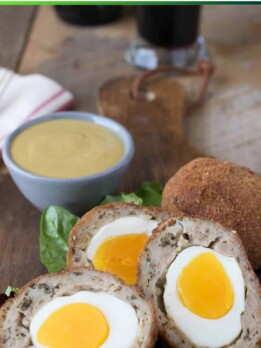
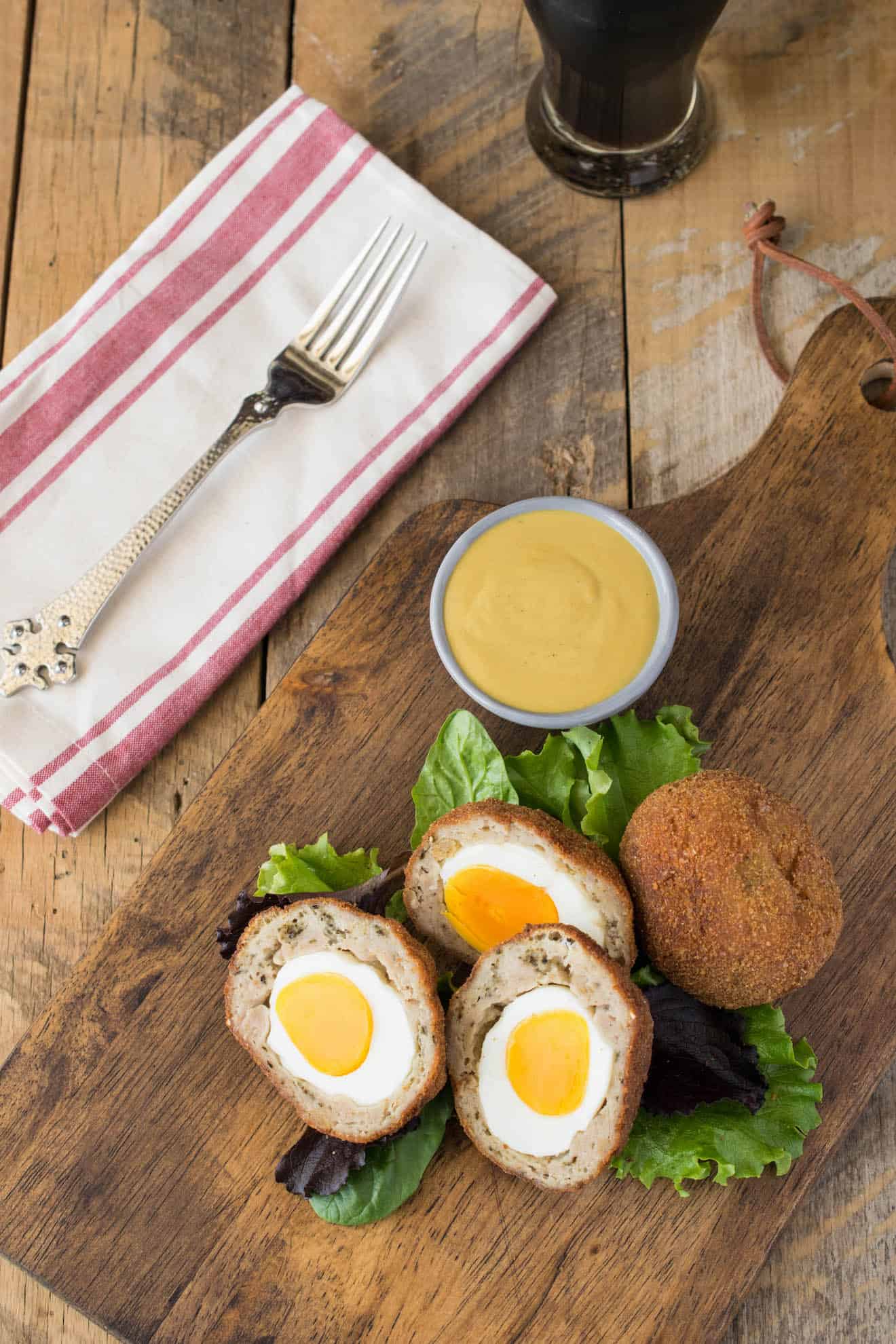
Few dishes capture the spirit of British fare like Traditional Scotch eggs. Known affectionately in some circles as Scotties, these pub staples feature a boiled egg wrapped in seasoned sausage meat, finished with a crisp breaded coating. Whether served as a snack or a starter, they are best paired with a tangy mustard sauce.

Table of Contents
What is a Scotch Egg?
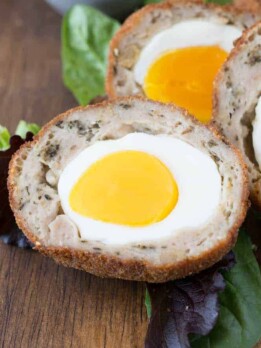
A staple of British cuisine that consists of a boiled egg encased in seasoned sausage meat, breaded, and fried until golden. While traditionally served with a firm yolk, they are equally delicious when prepared with a soft, runny center.
These protein-packed snacks are ideal for make-ahead meals; simply refrigerate and enjoy them cold for a convenient grab-and-go option. This guide details the technique for achieving a perfectly crisp exterior and savory finish every time.
Scotch Egg History
The history of the Scotch egg is a masterclass in culinary evolution. Despite the name, the Scotch egg is an English creation rather than a Scottish one. Historical accounts frequently credit the upscale London department store Fortnum & Mason with its invention in 1738, originally marketed as a portable snack for wealthy travelers.
The Indian Influence
Many culinary historians believe the Scotch Egg was inspired by the Indian dish Nargisi Kofta. During the 19th century, British officials returning from India likely brought the concept home, adapting the spiced kofta (an egg encased in minced meat) served in a rich tomato-curry.
This period also birthed other favorites like Piccalilli, a British take on Indian Achar. If you want to nod to these origins, try adding a pinch of garam masala or some finely chopped chillies to your sausage meat for a subtle, aromatic heat.
British Convenience Foods
Along with Sausage Rolls and Sandwiches , the Scotch egg is also a very popular convenience food sold in most grocery stores and food shops across the UK. For me, homemade is far superior to store bought and if you’ve never bought them, don’t bother, make them yourself instead. I even eat them for breakfast eggs and sausage are breakfast items after all, just add ketchup.
Just like the British dialect can change around the country and some areas of England have adopted their own local Scotch egg recipe. I have yet to try the variations on this classic, but one thing is for sure, these ‘eggstraordinary’ ovals of goodness are a staple in my household.
Serving and Cooking Tips
Homemade Scotch Eggs are delicious warm and crispy right out of the fryer, or perfect for a grab and go breakfast, road trip or picnic. They’re portable snacks!
You can boil the eggs so the yolks are runny or set, the choice is yours. See below for both methods.
Scotch eggs are the quintessential picnic and buffet food. Because they travel well and are equally delicious warm, cold, or at room temperature, they remain a staple of British outdoor dining.
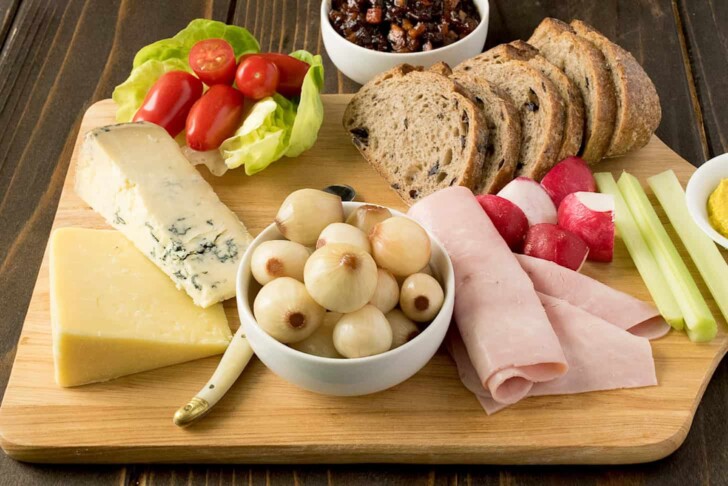
For a very British presentation, serve them as part of a classic cold buffet or a Ploughman’s Lunch. Much like a British charcuterie board, this pairing typically includes crusty bread, sharp cheddar and Pickled Onions (below)

Runny vs. Firm
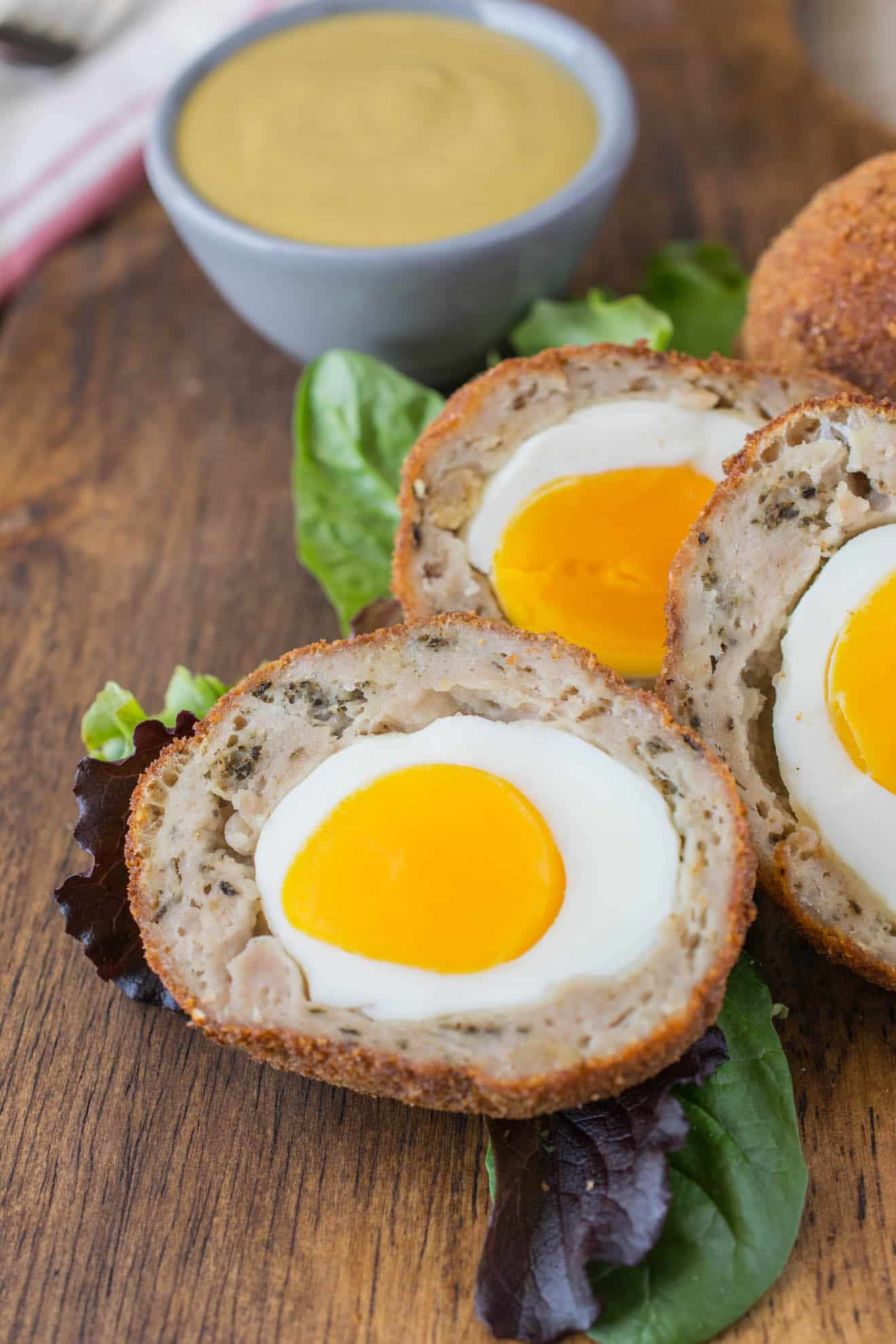
Many pubs favor a runny yolk for its richness. This is achieved by soft-boiling the eggs before they are wrapped and fried, ensuring the centers do not overcook. Whether you prefer a liquid gold middle or a classic firm set, both methods offer a proper Scotch egg experience.
How to Make Runny Yolk Scotch Eggs
Boil the eggs for six minutes if they are cold from the fridge, or four minutes if they are at room temperature. This ensures a perfect soft-set centre. Transfer them immediately to cold water and peel carefully once cooled. Wrap each egg in sausage meat, coat in breadcrumbs, and fry until golden.
Best Breadcrumbs to Use
The choice of breadcrumbs is entirely up to you. Traditional premade crumbs are the classic choice, but panko breadcrumbs offer an extra bit of crunch. For the best results, ensure the coating is even before frying for a nice, even golden brown crust.
Tips for Success
The trickiest part is forming the sausage layer. Flatten the meat in your palm until it is large enough to cover the egg (wetting your hands slightly helps prevent sticking). Carefully wrap the meat around the egg and press firmly to seal, taking care not to break it. Ensure there are no gaps or cracks, otherwise oil may seep in and cause the coating to split or crack during frying (see below).
Why Scotch Eggs Crack or Split When Frying
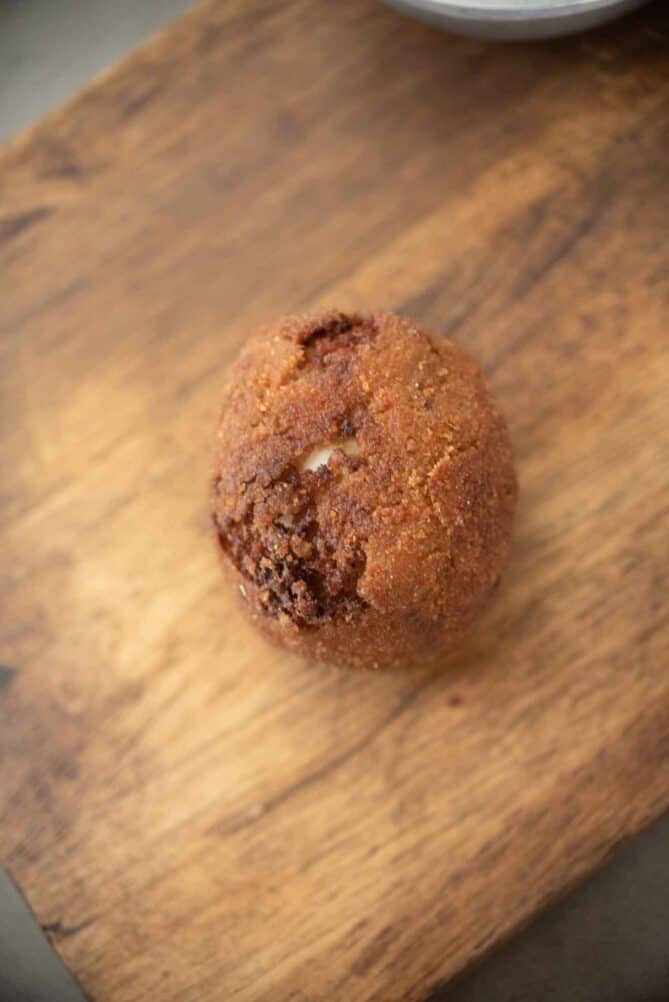
Splits occur when oil seeps through a gap in the sausage meat and reaches the egg. The sausage also tends to shrink slightly as it cooks, which can expand any existing cracks. To prevent this, ensure the meat is well-sealed and the oil is not too hot. If yours do split, it’s no problem, they are perfectly edible.
Air Fryer Preparation
Preheat your air fryer to 200°C (390°F) and lightly grease the basket with oil. Working in batches, place the Scotch eggs in a single layer with a little room between them. Cook for 12 minutes, turning them over halfway through until nice and golden all the way around.
Mustard Sauce
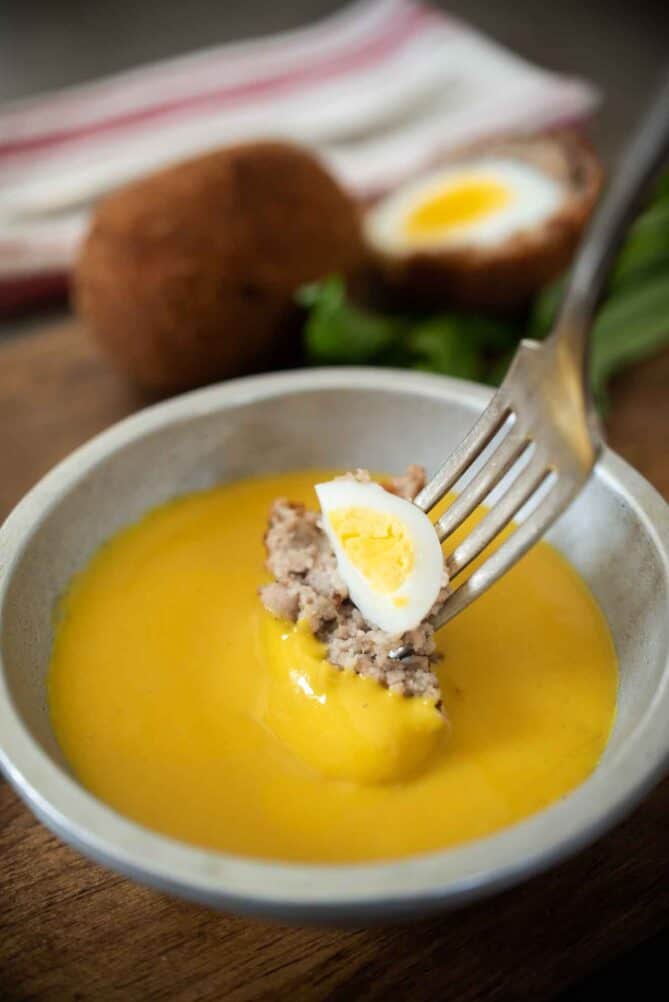
The accompanying dipping sauce is optional, but it provides a lovely dip for the eggs. It is also incredibly simple to prepare, requiring only three ingredients.
More British Recipes
Who says British food is bland? Have a look at my Steak and Ale Pie and Sticky Toffee Pudding for a few classic examples. You can also wash it down with a classic pub pint of Snakebite (lager and cider).
Traditional Scotch Eggs

Video
Ingredients
For the mustard sauce:
- 1 ½ cups (358 grams) Dijon mustard
- 1 tablespoon white wine vinegar
- 1 tablespoon honey
- Pinch of salt to taste
- Small pinch freshly ground black pepper
For the Scotch eggs:
- 4 large eggs, room temperature
- 4 British or Irish pork bangers/sausage links, casings removed
- 1 (150 grams) plain/all-purpose flour
- 1 larg egg, whisked (for the breading)
- 1 cup (119 grams plain breadcrumbs
- Salt
- Ground black pepper
- 1 quart (2 pints) frying oil
Instructions
Make the mustard sauce:
- In a small bowl, whisk together the mustard, vinegar, honey, and pepper. Set this aside to let the flavors blend.
Prepare the eggs:
- Place the eggs in a saucepan and cover with cold water. Bring to a boil, then reduce to a low simmer. Cook for four minutes (six minutes if using cold eggs) for a runny yolk, or 8–10 minutes (10–12 if using cold eggs) for a firm set. While they cook have a bowl of water and ice (ice bath) ready to cool them off.Immediately transfer the eggs to a bowl of ice water.
- Once cooled, gently crack the shells and return them to the water for two minutes; this helps the water seep under the membrane for easier peeling. Dry the peeled eggs thoroughly to ensure the sausage meat adheres properly.
Prepare the breading station:
- Set up three separate bowls: one with flour, one with the whisked egg, and one with breadcrumbs. Season the flour and breadcrumbs with a pinch of salt and pepper.
Assemble and fry:
- With lightly dampened palms, flatten a portion of the sausage meat. Place an egg in the centre and wrap the meat around it, pressing firmly to create a seamless seal.
- Dredge the wrapped egg in flour, dip it into the whisked egg (shaking off any excess), and roll it in the breadcrumbs until fully and evenly coated. Repeat for the remaining eggs.
- Add oil to a high-sided pan and bring it to 175°C (350°F). You can check the temperature with a kitchen thermometer or by dropping in a few breadcrumbs; if they sizzle immediately, the oil is ready.Fry the eggs for 5–7 minutes until they are a deep golden brown, turning them halfway through for an even cook. Drain on kitchen paper and serve with the mustard sauce.
This Scotch eggs recipe was first appeared on Food Fanatic where I am a contributor.
A fun thing we did one year was use food coloring to dye the peeled eggs different colors before covering with sausage and frying. They were a nice surprise that Easter!
That’s a really cute idea
I wet my hands when putting the sausage around other egg. This worked great. No splitting. Thank you for the tip.
You’re welcome 😊
AWESOME recipe. I used to live in England and now live in the Deep South where “away” food is not readily available. I use this recipe as my “guide” for the various variations I make. (Today I’m making them with Quail Eggs as a Party Appetizer. Perfect One-Bite App! (Boiled/Peeled Quail Eggs, in a can, can be found at Asian Markets for a buck or two and folks go crazy for that One Bite, grab and go, version).
Wow, I love the variations. Thank you for sharing.
Perfect recipe and very easy to follow
Thank you.
Thank you for the detailed instructions. I have attempted (unsuccessfully) to make scotch eggs several times. We are in the process at this very moment of turning eggs into delicious scotch eggs (hubby is wrapping the eggs and we speak). It might be nice if you added how thick the sausage coating should be to the recipe. I read the comments before attempting and see where you mentioned 1/4″ in a reply. along with your step by step guidance, it is immeasurably helpful.
It is hard to put a measurement on the thickness so that is just my estimate. I haven’t added it to the recipe as people use different size eggs so the thickness will vary. I hope they turn out the way you hope and you enjoy them. Thank you for choosing my recipe 😄
I had these in London last year and thought I would try and make my own. They’re so much easier than I thought to make them and will definitely make again, delicious!
This is wonderful to hear, thank you.
Second time making these, first time using your recipe. Look no further, this one is a keeper! I live in southern US and use Neese’s brand sausage and they turn out perfect. Thank you for this recipe! 🙂
Thank you so much for the lovely compliment. I’m so glad you like them.
These look so awesome! I was reading the comments on how to make ahead. If for a dinner party, can I fry a hour or so before? And reheat at what temp? Sorry to bother if you already answered!
What I would do, is make them ahead, then 20 minutes before serving, place them on a rack in a baking sheet (so they stay crisp all around) and warm them in a 200°F oven. I would not warm more than 20 minutes or they may dry out. I hope this helps and enjoy!
Heard the name but just found receip. As a retired chef always looking for something to try at home..n possibly pass on to friends still working in the biz
Great, I’m glad you found my recipe.
Is the sausage raw when you wrap it around the egg? How do you ensure its cooked adequately?
Yes, the sausage is raw when wrapped around the eggs. It is a thin layer of sausage so it does cook very quickly when deep-fried in the oil. I hope this answers your question.
We came back from a trip to the U.K., and my kids were missing the Scotch eggs, so I thought I’d give it a try and make them. I found your recipe and was pleasantly surprised at how easy they are to make. My kids are now happy and requesting them all the time 🙂
Aww, this is lovely. Thank you so much for the feedback.
So Scott eggs are never eaten hot at home?
You can eat Scotch eggs hot at home if you take them home and heat them up. But a lot of people eat them cold out of convenience on the go. I hope this answers your question.
Can you bake them instead of frying?
I have not tried baking them myself, but I have seen some recipes on Google so I do believe you can. I would say 375°F/190°C for around 25-30 minutes would work. Enjoy.
You can shallow fry them to seal them and then put them in the air fryer on 180°c for about 7-10 mins
Thank you
I love these. To cut calories, Air Fry at 400°F for 15 minutes, turning once at about 7 minutes, until golden brown. My guests love these!
Thank you for sharing this tip
Your Scotch Eggs sound delicious and I can’t wait to try them. Do you have a recipe for a sweet sauce, or a sweet and sour-type sauce, for the Scotch Eggs? My family doesn’t like mustard.
Thank you for your question. I do have a recipe for a trio of sauces with some Asian flavors. I’m not sure how they will taste with the Scotch eggs if you want to give one of them a try, here’s the link:
https://culinaryginger.com/trio-of-asian-dipping-sauces/
Do you have a recommended sausage from the States? Ours is seasoned differently.
Hi Jennifer, it’s hard to recommend a specific sausage since all stores carry different ones and there are so many out there. I like a good quality pork sausage that is not to seasoned with flavorings and lots of herbs but still tastes good. I hope this helps.
How long can you keep these after frying them? I presume you refrigerate them. Do you reheat or if picnic food, must be eating them cold?
Hi Jessica, I would say no more than 2 to 3 days covered in the refrigerator. They do not reheat well, but they are perfectly delicious cold and this makes them the perfect picnic food. Thanks for stopping by.
I’ve always wanted to try scotch eggs. Can’t wait to make them. Going to the grocery store now to pick up sausage. I’ll get back to tell you how they turned out! 😋
I welcome your feedback, thank you for choosing my recipe.
How do they make then with runny yolk? When I make my hard boiled eggs, if I let them sit more than 10 minutes I get green yolks. Yours are so pretty and how come the eggs dont get over cooked when you fry them?
Hi Karen, I have never made them with a runny yolk, but I would assume they don’t get fried as long. Green yolks usually means they are overcooked so don’t overboil. Turn off the heat as soon as they water boils. I hope this helps. Thanks!
Why do my eggs burst open when they are frying I love to eat them but they look awful on the plate?
I’m sorry to hear this. I’m wondering if you have enough sausage meat around the egg (approximately 1/4 inch thick but this will depend on the size of your egg) and that they are sealed well by making sure the sausage meat is tightly packed around the egg because the sausage meat can shrink when frying and this will cause the egg to show. I hope this helps.
I have never had scotch eggs but whenever I see them I feel like I need to learn how to make them! These look so good and thanks for your recipe too, will give it a try!!
I’ve never made scotch eggs, but these look so delicious! Pinned to try them!
Yes!!! I LOVE Scotch eggs! Bring on picnic season with these babies! The color of the yolks are so beautiful too!